
Teaching exceptionally able mid-career students - reflections by Dr Heather Strang
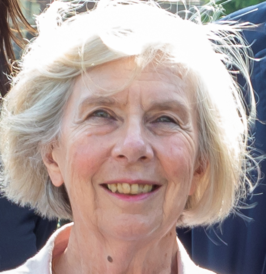
Article by Dr Heather Strang - Programme Director 2012 - 2019
My connection to the MSt Programme began with a part-time teaching role and supervision of a small number of students. But as enrolment grew, so did my engagement with the course. I had worked with police before, both in Australia and Britain, so I felt comfortable in the role, but this wasn’t always reciprocated: I remember several students addressing me as ‘Ma’am’, no matter how often I asked to be called by my first name.
Twenty years ago there were few senior women officers in British policing and this gender discrepancy was reflected in our enrolment. In my first year of full engagement with the programme there were no women at all in the course so, together with the then Chief Constable of Cambridgeshire Constabulary, Julie Spence, I embarked on a concerted effort to change this. Through our efforts we increased the proportion of women in the Programme to around one third, matching their representation in policing generally. My own background in victim issues also introduced a new dimension: at that time little attention was paid to the victim perspective in policing policies and practice.
By the time I became Programme Director, its size had grown exponentially and in most of the years of my directorship there were over one hundred students across the two years of the course. As well as the growth in the number of women, an increasing number of students were from overseas which had the mutually beneficial consequence of productive exchanges with their British counterparts. This increase necessitated a rapid increase in the number of supervisors, most of whom we drew from the ranks of recently retired Chief Constables, the highest rank in British policing. They proved to be ideal as bridges between the worlds of policing and the university, diligent in achieving proficiency in the course content and expert in interpreting it to our first year students.
The Chief Constables’ involvement allowed the Programme’s academic staff to devote themselves to supervising theses in the second year. I think all my colleagues would agree that this was the most satisfying kind of teaching: exceptionally able mid-career students eager to learn, with access to extraordinary data as well as personal experiences. In many cases these theses have led to important novel research findings and new policies and practices in the profession.
The Programme has been extraordinarily far-reaching in its impact and I speak for all of us engaged in it when I say how proud we are of our students, many of whom have gone on to achieve the highest ranks in policing, and of the difference they have made in their profession.