
Bridging the gap: The origins and legacy of the Cambridge Police MSt
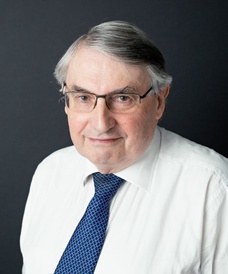
Article by Professor Sir Anthony Edward Bottoms FBA - Wolfson Professor of Criminology Emeritus, University of Cambridge
The Origins
In 1996, the Institute of Criminology (IoC) at the University of Cambridge began to offer a postgraduate course in police studies aimed at senior police officers. The immediate origin of the course was a telephone call I received when I was Director of the IoC. I was asked whether I would be willing to meet with the National Director of Police Training to discuss whether the Institute might assist in the training of senior officers. I said ‘yes’.
One reason why I said ‘yes’ was something that had happened very recently in Cambridge. For centuries, the University had awarded degrees only to students who had been resident in Cambridge on a full-time basis. However, the University had recently accepted a proposal from its Board of Continuing Education (BCE) to create a new part-time postgraduate degree – the Master of Studies (MSt) – designed to be flexible and accessible to working professionals.
When I met with the National Director of Police Training, Peter Ryan, I had these new possibilities in mind. Peter Ryan’s agenda was that he wanted senior police officers to know more about the growing body of research on policing, in particular as part of the annual Strategic Command Course (SCC), a training programme for officers identified as having the potential to reach the rank of Assistant Chief Constable or higher.
The Initial Structure
In that first meeting, we sketched a framework for what became the police MSt course. It was designed around the SCC: Four weeks of the SCC would be taught exclusively by IoC staff at Bramshill Police College, counting towards a Cambridge qualification; two further optional weeks would be offered in Cambridge, with costs met by National Police Training; and a second year of methodology teaching and dissertation supervision would lead to the MSt degree itself. In those early years, many SCC students took only the first year because they were immediately promoted to new posts — often in a different force — and needed to focus on their new responsibilities.
Admission of ‘non-standard’ students
An interesting issue arose internally relating to acceptance of students with no prior university degree. BCE ruled that all students must be registered as MSt students at the start of the first year. However, some officers accepted to the SCC had no university degree.
BCE had reservations about enrolling such people on a postgraduate course, but I argued strongly in favour of it. I made two points: First, no-one would have been selected as capable of a senior command post unless they had very considerable analytic abilities. Second, if they struggled academically, this would become apparent in the first-year assessment, and they could be denied access to the second year of the course (having potentially earned a Diploma). This argument won the day. Subsequently, several such ‘no degree’ students reached the standards required to qualify for an MSt – and were very grateful for the opportunity. I had confidence in pressing this case as I had previously admitted criminal justice professionals with no first degrees to a Master’s programme at Sheffield University – also with successful outcomes.
Implementation and Early Success
The IoC needed guarantees to mount this programme, including a time commitment of several years and funding for new academic staff. Our contract with National Police Training provided the resources to appoint new lecturers. Dr Trevor Bennett, our University Lecturer specialising in police studies, became the first Director of the course, and played a decisive role in preparing and developing the course. When the course started, he was supported by two newly appointed fixed-term Lecturers, Dr Janet Foster and Dr Ben Bowling.
Bridging the gap between academic thinking and the realities of frontline policing required significant patience from both sides. However, these issues were overcome, and the evaluations of the course were consistently positive. Among the most successful early students were Cressida Dick—who later became the first female Commissioner of the Metropolitan Police Service—and Dr. Peter Neyroud, who went on to serve as the first CEO of the National Crime Agency. It is a testament to the enduring bond formed during these years that both later returned to the fold: Peter Neyroud served as Deputy Director and subsequently Director of the Police MSt programme, and Associate Professor of Evidence-based Policing, while Dame Cressida Dick served as the Institute’s Sir Leon Radzinowicz Fellow in 2018–19.
Evolution and Legacy
In the early 2000s, the SCC was restructured into a much shorter programme, and the Cambridge element was discontinued. This left the Institute with the question of whether the MSt Police course could be continued. We opened the course up for police officers of a certain seniority and were fortunate to receive unexpected interest from two other forces. The first was from Trinidad and Tobago, responding to major crime concerns in their jurisdiction. The second came from the newly established Police Service of Northern Ireland (PSNI), which - following the historic Good Friday Agreement - approached the IoC to ask whether police officers identified as potential managers within this force could undertake the Cambridge MSt. So for a few years, a significant group of their officers came on the course; and of them, Drew Harris, later served as Commissioner of An Garda Siochana, the national police service of the Republic of Ireland.
In 2007, Lawrence Sherman, a global leader in police research, was appointed to succeed me as Wolfson Professor of Criminology at the IoC. He assumed primary responsibility for the course, and he took it in some fresh directions.