
From Applied Criminology to evidence-based policing, 1996 - 2026
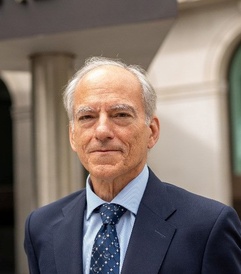
Article by Professor Lawrence W. Sherman KNO FRSA - Wolfson Professor of Criminology Emeritus, University of Cambridge
When the Home Office first asked Professor Sir Anthony Bottoms to design a graduate course for future police chiefs, the concept of “evidence-based policing” had yet to appear in print. The course aimed to integrate “applied criminology” into “police leadership” for a broader vision of modern policing. Yet the ways to actually apply criminology to policing had not yet attracted much attention from criminology professors.
So when the US Police Foundation asked me for a lecture in 1998, I jumped at the chance to show how police research could be the basis for continuous improvement: what I called “evidence-based policing”[1]. And when the Cambridge Institute of Criminology asked me to direct the MSt course in applied criminology and police management, I jumped at the chance again. It was a chance to promote police decision-making based on more research evidence than ever before.
Much of that research came from our police leaders and students. We quickly moved from just testing what works in policing to a broader vision of the “Triple-T” I used in teaching: Targeting, Testing and Tracking. The concept of targeting emerged from my 1987 discovery of “hot spots” of crime in Minneapolis and a “power few” of victims, offenders and places, as described in the 2006 McCord Lecture.[2]. But my challenges with our Cambridge students from Trinidad also showed the need to track what the police did where and when, which then led to a reduction in homicides, with an MSt graduate appointed as Police Commissioner.
The course’s vision quickly became the street-level actions our students could take with the research we had discussed in Cambridge. The spread of TTT policing was evident in our MSt thesis results, many of which have been published and widely read, like Gavin Dudfield’s 17,000 readers of his 2017 findings.[3]. His police force applied his findings to create a system of proactively targeting the highest-harm victims for greater protection. More broadly, the UK Home Office has offered extra funding for police agencies to target and track, with a focus on high-harm targets, as measured by another result of the MSt course: the Cambridge Crime Harm Index.[4], now used in countries around the world.
None of this would have been possible without the generous benefaction of Jerry Lee, whose donation endowed the Jerry Lee Centre for Experimental Criminology at the Institute. Under the continuing direction of Professor Heather Strang, the Centre remains strong — supporting field experiments, annual seminars, and a global network of scholars and practitioners committed to evidence-based policing.
Policing today is now full of second- and third-degree circles of teaching of these concepts by MSt students to their colleagues, who taught them to other colleagues, and so on. But there should be no doubt: it was the students who graduated and used EBP who made all the difference.
Return to main page and read related articles
[1]Sherman, L. W. (1998) Evidence-Based Policing. Police Foundation. Available at: policinginstitute.org.
[2]Sherman, L. W. (2007) ‘The power few: experimental criminology and the reduction of harm’, Journal of Experimental Criminology, 3, pp. 299–321. Available at: link.springer.com.
[3]Dudfield, G. et al. (2017) ‘The “Power Curve” of Victim Harm’, Cambridge Journal of Evidence-Based Policing. Available at: link.springer.com.
[4]Sherman, L. W., Neyroud, P. W. and Neyroud, E. (2016) ‘The Cambridge Crime Harm Index’, Policing: A Journal of Policy and Practice, 10(3), pp. 171–183. Available at: academic.oup.com.