
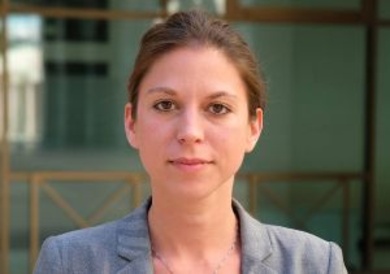
Zora Hauser, recipient of the Leverhulme Early Career Research Fellowship, has recently published her book ‘Mafia Expansion: The ‘Ndrangheta in Established Democracies’. In it, she explores how the Calabrian mafia has managed to establish itself in stable, well-governed democracies such as Germany – and what this means for our understanding of organised crime.
Using confidential judicial files, police intercepts, and interviews, Hauser builds a rare, evidence-based account of how mafias adapt and integrate in contexts long assumed to be resistant to such forms of organised crime. “In general, what drives my research are counterintuitive puzzles – situations where something doesn’t seem to make immediate sense. The Italian mafia shouldn’t be in Germany: Germany is meant to be very efficient. It’s well policed, it has a functioning welfare state, a strong judiciary, and low levels of corruption – everything that should make it difficult for advanced forms of organised crime to exist.”
And yet, as Hauser documents in the book, the mafia has been present in Germany for half a century, integrating into local communities and infiltrating the economy. “I wanted to understand whether this was really true, and if so, why it had gone largely unnoticed.”
How the Mafia Took Root in Germany — and Why It Matters
Hauser’s book challenges the assumption that mafia organisations flourish only in weak or corrupt states. Organised crime and mafia presence are typically associated with state fragility, social distrust, corruption, and limited economic opportunity. Most studies on the subject have focused on such contexts. By looking at the case of Germany, Hauser shifts attention to a radically different setting.
“In the Global North, we often fail to look critically at our own contexts,” she says. “There’s a tendency in both research and public discourse to assume that organised crime, corruption, and violence are problems that happen elsewhere – in regions viewed as weaker or more corrupt – rather than acknowledging their presence within our own social and political systems.”
Hauser travelled to towns and villages throughout Germany, speaking with mayors, police officers, prosecutors, and residents to understand how mafia networks embed themselves within local communities and economies. Her findings reveal that efficient institutions and civic trust do not necessarily prevent mafia entrenchment. On the contrary, trust in the state can create “blind spots” that allow organised crime to persist unnoticed. The mafia did not arrive in Germany overnight. “It hasn’t happened all of a sudden,” Hauser explains. “It has been developing for decades. All the pieces of the puzzle were there – it’s just that nobody put them together.”
The consequences can no longer be overlooked. Hauser’s research shows that today, thousands of Italian mafiosi operate in structured cells across Germany, directly connected to the core organisation in Italy. They have been active for decades, largely beyond the reach of law enforcement. Beyond Italian groups, Germany has also become a base for a variety of other criminal organisations and one of Europe’s main entry points for cocaine from Latin America.
The Challenge to Democracy
Yet, as Hauser argues, Germany is not an isolated case. Across Europe and North America, mafias and other organised crime groups have entrenched themselves within legitimate economies and local communities. The very principles that underpin democratic governance – the rule of law, privacy, and limited state powers – can make it difficult to detect and disrupt criminal networks that operate discreetly within those same systems.
“This is the real challenge that organised crime poses to our democracies,” Hauser explains. “It is not all about violence. The real tension lies between protecting rights and ensuring security. If we extend state powers too far, we risk undermining the very rights and freedoms that define democratic life. But if we do too little, communities lose trust in the state’s ability to protect them. That erosion of trust is, in the long run, just as dangerous.”
Hauser hopes that her work will contribute to advancing our understanding of one of the major challenges facing democracies today. But she emphasises that much remains to be explored. More research is needed to understand how rights-based systems can effectively confront organised crime without compromising the very principles they seek to uphold.
Zora Hauser can be contacted for questions at zlh26@cam.ac.uk.
Her upcoming lectures are:
16 October 2025 - 17:00: Criminology Seminar Series, Institute of Criminology, Cambridge University (online attendance possible) – info here
13 November 2025 - 15:30: All Souls Criminology Seminar Series, All Souls College, University of Oxford (online attendance possible) – info here