
MSt in Applied Criminology and Police Management (Police Executive Programme)

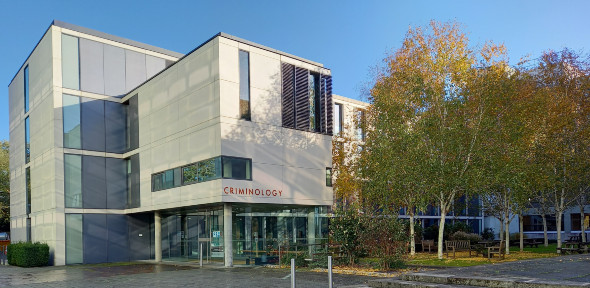
Welcome to Cambridge
Shaping Safer Futures
The challenges of crime, harm, and security are more complex than ever. From digital threats and serious violence to the responsible use of new technologies, today’s leaders need fresh tools and rigorous evidence to deliver solutions that work.
For more than 60 years, the Institute of Criminology has been internationally recognised as a leading research centre for shaping evidence-based approaches to policing, crime reduction and justice. The Police Executive Programme builds on this strength, offering you the depth of Cambridge research combined with direct application to contemporary challenges in safety and security.
The Cambridge Police Executive Programme offers a two-year, part-time Master’s degree designed for professionals responsible for tackling crime, reducing harm, and improving safety. It combines Cambridge’s research strength with practical approaches that help you modernise practice and make an impact in your organisation and beyond.
Our latest brochure can be downloaded here.
Why This Programme?
- Solutions That Reduce Harm
Learn from tested interventions—such as targeted patrols that cut violent crime and evidence-based strategies that improve victim outcomes—that can be adapted across diverse contexts. - AI, Technology and Data
Explore how artificial intelligence, predictive analytics and digital innovation can be applied responsibly to crime problems, transforming data into tools for prevention and decision-making.
What Will You Gain?
- Skills to apply criminological research directly to your operational or strategic challenges.
- The capacity to evaluate and test new approaches with academic rigour.
- Confidence to implement reforms that can withstand scrutiny.
- Access to a professional network that extends well beyond Cambridge.
Programme Format
Year One
Three residential blocks (April, July, September) that establish your foundations in criminological theory, research methods, and applied practice. You will be assessed through three essays designed to test your ability to connect academic knowledge to real-world policing and security challenges.
Year Two
The heart of the programme. Across three further residential blocks, you will work under individual Cambridge supervision to produce 1 further essay, as well as a research proposal and finally a 18,000-word thesis. This is not simply an academic exercise—it is your opportunity to design and deliver original research that addresses a pressing issue from your professional context. The thesis represents a direct contribution to evidence-based practice, with the potential to influence both policy and frontline decision-making.
Notable recent dissertations:
- Hotspot foot patrols demonstrated that just 15 minutes of patrol per day in targeted areas could reduce serious violence significantly—findings that have since shaped force deployment strategies.
- Behavioural nudges to increase attendance at mandatory drug treatment sessions, leading to a measurable improvement in compliance and informing national policy discussions on rehabilitation.
- Applied AI-driven predictive modelling to domestic abuse cases, identifying patterns of escalation and high-risk households earlier. This work has guided resource allocation across England & Wales.
Who Should Apply?
The programme is designed for:
- Senior officers and managers seeking to modernise policing and security practice.
- Analysts and professionals working with data, crime prevention, or strategy.
- Practitioners in justice, safety, or public policy who want to ground their work in rigorous evidence.
Applicants with professional experience, even without a traditional academic background, are welcome.
Fees and Financial Support (over two years)
- The Institute has a limited number of studentships that MSt students from overseas can apply for. Details and application deadlines can be found on the Funding Opportunities webpage.
- University Composition Fee (£15,450 total) covers the University tuition fee.
- Residential and Supplementary Costs (£15,550 total) which includes mandatory residential teaching blocks, college accommodation (excluding weekend accommodation) and other related expenses
For further information about the course please read the former students’ stories, including their experiences at the Institute and what they are doing now.
Applications
- Next intake: Easter Term 2027
- Applications open early September 2026. Click the button below from early September to join a course that blends academic excellence with practical impact—helping you design and deliver solutions to today’s most pressing crime and safety challenges.
Click here for useful information on “How to Apply”
This MSt course is underpinned by four key pillars that shape how participants think, analyse and act in tackling harm and crime:
- Targeting Harm Effectively
Matching interventions with proportionately harmful risks to ensure resources are directed where they can make the greatest difference. - Measuring Harm Systematically
Using tools such as the Crime Harm Index to assess the seriousness of offending and its impact, rather than relying solely on volume counts. - Making Better Decisions
Applying the “Triple-T” of Targeting, Testing and Tracking as the foundation for a fourth “T”: Transformation. These methods ensure strategies are designed, assessed and refined for real-world impact. - Bridging Practice and Research
Developing practitioner-academics (“pracademics”) who can generate, apply and promote research to improve decision-making, leadership and management in their organisations.
Together, these pillars frame our commitment to modernising practice, safeguarding vulnerable people, protecting communities, and reducing harm.
Course Structure
Teaching Blocks
There are three teaching blocks in the first year:
- Block A (March/April)
- Block B (July)
- Block C (September)
The residential teaching blocks cover four key modules: Criminological Theory, Evidence-Based Policing, Leadership and Management, and Research Methods. Delivery includes seminars, lectures, symposia, project work and practical exercises.
2026 Dates
Year One
Block A
6 April - 17 April
Block B
13 July - 24 July
Block C
7 September - 18 September
Year Two
Block D
30 March - 10 April
Block E
6 July - 17 July
Block F
14 September - 25 September
Reading Lists
Required and recommended readings are provided in advance of each teaching block.
Personal Supervisor
Every student is allocated a supervisor for one-to-one academic guidance, including essay choices, dissertation planning, time management, and sources of evidence. Independent study is also built into the programme.
Library Facilities
Students benefit from access to their College library, the Radzinowicz Library (Institute of Criminology), the Squire Law Library (Faculty of Law), Cambridge Judge Business School, and the University Library.
Other Resources
A virtual learning environment (Moodle) provides additional support and course materials.
Postgraduate Certificate Option
Students who successfully complete the first year without progressing to the dissertation will be awarded the Postgraduate Certificate in Applied Criminology and Police Management
Teaching Staff and Industry Experts
Professor Barak Ariel is the Director of the MSt in Applied Criminology and Police management and a Professor of Experimental Criminology. Professor Ariel has played an active role in both teaching and supervising MSt students since 2009, fostering the next generation of pracademic experts. He actively engages in evaluation research projects alongside numerous criminal justice agencies worldwide; he is the immediate past Chair of the Division of Experimental Criminology and a Member of the Executive Board of the Division of Policing within the American Society of Criminology. He is also the Chair of the Ethics Committee at the Institute of Criminology. Professor Ariel's research output includes over 160 papers published in leading criminological journals. His work spans a broad range of critical topics in law enforcement, from the integration of technology in policing to place-based criminology and innovative alternatives to traditional criminal justice approaches. His recent research interests include the exploration of behavioural economics and the use of machine learning in police field settings.
Dr Peter Neyroud CBE QPM is an Associate Professor in Evidence-Based Policing. He is a former Chief Constable of one of the largest UK forces, Thames Valley (2002-7) and founding Chief Constable of the National Policing Improvement Agency (2007-2011), which he recommended in an Independent Report commissioned by the Home Secretary be converted into the current College of Policing. From 2011-2014 he was the Director of the Birmingham Turning Point Project, a randomised controlled trial testing the effect of deferred prosecutions on 400 first offenders randomly assigned to be offered immediate rehabilitation programs within hours of arrest, or to standard prosecution. He completed his PhD at the Cambridge Institute of Criminology in 2017. He is the Co-Chair of the Campbell Collaboration Coordinating Group on Crime and Justice; editor of Policing: A Journal of Policy and Practice; and a Fellow of Wolfson College.
Dr Sara Valdebenito is an Assistant Professor in Applied Criminology & Police Management at the Institute of Criminology, and Director of Studies for the Police Executive Programme. Her current research focuses on risk assessment algorithms and their implementation within operational settings. During the last three years she has been teaching quantitative methods at the Institute of Criminology and the Social Sciences Research Programme at Cambridge.
Suzette Davenport MBE QPM served for over 31 years in policing in five different forces. Her service started with West Mercia Police and she retired as the Chief Constable of Gloucestershire in 2017. In addition to her force roles Suzette was the police lead for Roads Policing during which time she established transparent and accountable governance arrangements for the National Driver Re-offending Scheme. She remained chair of the wholly owned stranding subsidiary, UKROEd as a non-executive director until May 2022, qualifying as a Chartered Director in 2017. She is a Fellow of the Cambridge Centre for Evidenced-Based Policing and an Honorary Fellow of the University of Gloucestershire. She holds an MBA.
Dr Brandon Langley was a police officer for 30 years starting in Staffordshire Police and then West Midlands Police, with experience in neighbourhood policing, crime and counter terrorism. From 2015-2021 he was the national project manager of ‘Project Insight’, a UK wide randomised controlled trial testing the effect of procedural justice training on police self-legitimacy and legitimacy perceptions of the public subject to police counter terrorism powers. He completed his PhD at the Institute of Criminology in 2022 and is a former graduate of the Police Executive Programme. His research interests include procedural justice, police legitimacy and self-legitimacy.
Dr Eleanor Neyroud is an affiliated lecturer at the Institute of Criminology supervising and lecturing on the MSt program. She also works for the Cambridge Centre of Evidence Based Policing and the Metropolitan Police, teaching evidence-based policing and carrying out research. This research includes topics such as domestic violence, youth offending, the victim-offender overlap and hotspot policing. Eleanor has both a PhD and an MPhil in Criminology from the Institute of Criminology, as well as a Bachelor’s degree in Equine Science from the University of the West of England. She has extensive and in-depth experience of working on Randomised Control Trials in policing; and was involved with both the first Turning Point Project based in Birmingham and the replication in North West London, as well as other randomised controlled trials testing interventions in custody, knife crime prevention orders and creation of a digital toolkit. She is also one of the authors of the Cambridge Crime Harm Index.
Dr Jacqueline Sebire is a former Assistant Chief Constable for Joint Protective Services for Bedfordshire, Hertfordshire and Cambridgeshire. She oversaw specialist operations, major crime and forensic services across the three counties. The majority of her service was as a detective in homicide and serious crime investigations in the Metropolitan Police. She was the senior investigating officer for a number for a number of high profile cases including the ‘Spy in the Bag’ case and the conviction of Britain’s youngest hit man. Jacqueline has a PhD in Forensic Psychology and has been a supervisor on the MSt in Applied Criminology & Police Management course at the Institute of Criminology since 2016. She has published a number of articles in relation to domestic abuse and risk management and lectured nationally and internationally on her research. Now retired from the police force, she is currently Assistant Professor in Policing and Security at Rabdan Academy, United Arab Emirates.
Debbie Simpson QPM began her career in Bedfordshire Police in 1984 where she remained for the next 24 years working predominantly within the detective arena. She transferred to Devon and Cornwall as Assistant Chief Constable for Crime and Operations before transferring to Dorset. In 2012 she became Chief Constable until retiring in 2018. Within Dorset, she led an ambitious collaboration programme alongside local and regional approaches to austerity, whilst building capability within the region as the Chief Constable lead for serious and organised crime. Debbie worked to transform how forensic services were provided across law enforcement; she also led the UK approach to Disaster Victim Identification for ten years and was responsible for overseeing many international deployments. Debbie was a Co-Director for SPNAC, fast-track and direct entry and was also the Director for the Strategic Command Course for her final two years of service. She holds an MBA and is an alumna of Wolfson College having attended the Wolfson Course in 1999.
The Cambridge MSt in Applied Criminology and Police Management has been at the forefront of evidence-based policing for over three decades. As one of the first programmes globally to embed scientific methods into senior police education, it has shaped the development of evidence-based policing (EBP) and established Cambridge as the intellectual home of this movement. The course has consistently pushed policing and public safety professionals to think critically, challenge assumptions, and apply rigorous research to pressing operational and policy challenges.
With more than 1,000 graduates worldwide, the programme has created a unique professional community. Many of today’s most senior policing leaders—including a significant proportion of Chief Constables across England and Wales—are alumni. These leaders carry Cambridge’s influence directly into the decision-making structures of modern policing, embedding EBP principles into national strategy, operational practice, and organisational reform.
The intellectual contributions of the MSt extend beyond its graduates. Cambridge faculty and students pioneered the Crime Harm Index (CCHI), now adopted internationally as a more accurate way of measuring the seriousness of offending and setting policing priorities. Graduates’ dissertations have become operational blueprints—from hotspot policing and focused deterrence to AI-driven risk forecasting—showcasing the tangible influence of the programme’s research on real-world practice.
The programme’s impact is also global. Alumni hold senior roles across Europe, North America, Asia, Africa and the Middle East, exporting Cambridge’s model of rigorous analysis and evidence-based solutions into their own jurisdictions. International collaborations, from randomised controlled trials of patrol strategies to policy innovations in safeguarding and cybercrime, demonstrate how research generated in Cambridge resonates far beyond the UK.
Taken together, the Cambridge MSt has not only produced generations of leaders but has also transformed how policing understands effectiveness: away from tradition and instinct, and towards evidence, innovation, and harm reduction. It is this blend of academic rigour and operational relevance that makes the programme a world leader in police education.