
Interview with Pia Sinha
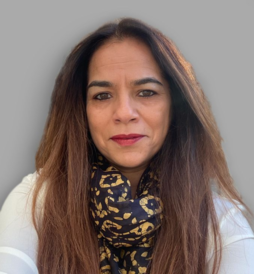
Can you briefly summarise your time at the Institute of Criminology?
I did my MSt in Criminology, Penology and Prison Leadership in 2015. I had worked for the prison service as a governor, and the course was offered to senior leaders in the prison service, paid for by the organisation.
It was an intense course. But being in Cambridge and living in Cambridge for those periods of time, immersed in the Cambridge culture, was a brilliant life experience. I'll be a lifelong fan of the institute.
What convinced you to study Criminology?
I'm a qualified psychologist. I trained in 1999 and became a chartered psychologist, working in the prison service.
All of my work was around people in prison, prison organisations, and prison leadership- lots of focus on criminology. So, when this programme came up, I'd heard that a number of people I knew had already graduated through the Cambridge Masters, and it was one of the most prestigious courses that you could do.
It was a highly valued course in the prison service, and I felt like it would be a really good opportunity to build on the skills and interests that I've already acquired, through both my academic study in psychology and my practise in prisons. So, I applied, and I got in.
Why did you decide to come to Cambridge?
It's the creme de la creme. Being able to put that you have a Masters from Cambridge is among the best things that you can possibly do academically. Not only is it recognised in our sector and it's a relevant qualification, but you expect a very high standard of study.
But for me, I was fangirling on all the academics that taught on the programme. Ben Crewe, Alison Liebling, Lorraine Gelstorp, Lawrence Sherman- all of these individuals were like rock stars to me. I'd come up through my career, reading their books and being familiar with their research. Having the opportunity to be at the Institute, being taught by people like that, and to be in that environment, was an absolute privilege.
Can you briefly describe your thesis?
My particular interest was always in prison leadership, because that was my career journey.
So, for my thesis, I interviewed all of the deputy directors of the prison service who were working in the operational line, about their experience of leadership as senior civil servants. It was looking at not only what kind of qualities they had, but what drove them into their career selection, and their experience as leaders.
That was when the prison service was going through a particularly, you know, tumultuous time. And against that backdrop, I wanted to ask them questions about their motivation and what their leadership qualities were. My thesis was a qualitative piece of work around their leadership journey.
What have you gone onto since graduating?
When I did the Masters, I was governing my first gaol- a small, open prison called HMP Thorn Cross in Cheshire.
Since my Masters, I went on to govern two bigger prisons. I governed HMP Risley, which was one of the largest Category C prisons. Then I went on to govern HMP Liverpool, which was the largest Category B local prisons in the Northwest.
After I governed HMP Liverpool, I was promoted to being a senior civil servant and did a couple of years in headquarters. My last role within the prison service was Director of Women, where I was in charge of all the women's prisons in the country for a few years. Then when I left the prison service two years ago, I joined the Prison Reform Trust and I'm currently their chief executive.
I could very proudly say that if Cambridge wants to take any credit for that, which I think they should, my career has gone from strength to strength since I did the masters.
Can you give some examples of how you have used learning from the course in your career?
I think that the timing of the course was absolutely crucial for me, because when I was at HMP Thorn Cross, it was the first prison that I governed. And when you're in that place, governing your first prison, it's the place where you cut your teeth. As a leader, it's a smaller prison, but you have all of the responsibilities of leading it. I was trying to explore my leadership style and understand my values, and I was doing the Masters at the same time, researching and immersing myself in that in in the Cambridge environment. I really think it was pivotal in helping me develop and hone my skills as a leader.
It allowed me to feel very validated about some of the things that I was thinking of. But it also gave me the benefit of external expertise in helping me decide what needed to be done, what needed to be prioritised, how good leaders would think, what other people had done. It was an absolute perfect time for me, to have done the MST, because it shaped the rest of my career. It’s been 10 years since then, and I think that what I was exposed to at Cambridge really helped me understand what my mission was. And for that, I feel incredibly lucky.
What was the most important thing criminology taught you?
Criminology is a vast subject. I think what I learnt more about what prison leadership is about: what is the challenge of running prisons? They're very complex systems. What are some of the challenges of being a leader in that system? Where do you get your legitimacy from the insights of your research? What are the factors that leads people into crime and criminality? How do we manage them in a in a way that feels right and just and humane?
All of that research really opens your eyes. When you're in a prison system for as long as I have, even though I come from an academic background and have academic qualifications, you can very quickly become blinkered to the to the prison that you operate within, because they’re such closed systems. Studying criminology and understanding those theoretical perspectives really sets you along the right track.
But you’re also inspired by the work that's been done by others. What happens when you're in prison, especially when you're a prison leader, is that you don't necessarily feel very valued. It's not a role or a job that the outside world knows very much about. They don't understand how challenging the job is or what the leadership task is. If you’re inside a prison bubble, you can leave with an undervalued idea of your own skill set, and being on the Masters makes you realise that you do actually have enormous skill.
There are individuals that really value your talents, your skill, and the work you do, and recognise that it's such an important role. There was a real sense of validation that you feel being part of that, because you are amongst other professionals. You leave with a stronger sense of self as a leader, so it allows you to go on to become a better practitioner.
What advice would you give to somebody who was starting your course?
My advice would be to remember that Criminology is not just an academic subject. It's actually about enhancing your insight into life, and how people live, what kinds of experiences they have, and the role that poverty and disadvantage play in predisposing some people to being criminalised. What happens to them in the system? It kind of opens the doors and windows to a world that's closed.
So, my advice would be is to try and make the most of those insights and hopefully use that as a way of really deepening your understanding of the world. And not only your understanding of the world but also deepening your empathy towards those who get trapped within the criminal justice system, and how you can support and help.